Kazu Ransomware Decryptor
A Kazu attack doesn’t always introduce itself with locked files or malfunctioning systems. In many cases, organizations learn of an intrusion indirectly: a quiet mention on a dark-web leak forum, a sudden appearance on a Kazu-branded Telegram channel, or unexpected alerts that confidential data has begun circulating outside the organization. Sometimes the warning signs surface internally first—odd authentication logs, unexplained transfers of large data sets, or an extortion email claiming that critical databases have already been extracted.
Once confirmed, organizations often find their names listed among a broad and troubling roster of global victims: insurance firms like Leadway Assurance in Nigeria, healthcare facilities in the UK, civil-service and human-rights platforms in Colombia, public-sector systems in Mexico and Sri Lanka, ministries and agencies in the UAE and Saudi Arabia, Thai and Nepali law-enforcement portals, education secretariats across Latin America, and numerous municipal service platforms. This makes one fact unmistakable: Kazu is not a fringe actor but a steadily expanding data-extortion group that targets institutions holding valuable, sensitive, and sometimes politically significant information.
Unlike traditional ransomware families that rely on file encryption to force negotiation, Kazu frequently focuses on data theft first, moving quietly inside systems, extracting sensitive material, and then leveraging that stolen data as blackmail. Their extortion infrastructure—often built around a Tor leak site, Telegram announcements, and private messaging channels—serves to amplify pressure. Yet even with data theft involved, victims are not left powerless. When organizations follow a structured response, combining forensic investigation, controlled communication, and well-planned remediation, they can confront Kazu effectively without funding criminal activity.
At the center of such a structured response is Kazu Decryptor, our specialized investigative and recovery framework. It is engineered to help victims understand what happened, determine what attackers accessed, evaluate data-exposure risk, and guide a safe path toward remediation and long-term resilience—all without paying the extortionists.
Regain Control and Stability With the Kazu Decryptor
Kazu’s extortion cycle follows a recognizable rhythm increasingly common among data-broker ransomware operations:
- Stage 1: The attackers infiltrate systems and exfiltrate sensitive information quietly.
- Stage 2: The victim is contacted—either directly or through a public listing on Kazu’s Tor-based leak portal or Telegram channel.
- Stage 3: A deadline is issued, accompanied by threats to leak or sell the information unless payment is made.
Across posts attributed to Kazu, the group boasts of stealing large volumes of internal documents, PII-linked databases, sensitive government files, classified law-enforcement material, insurance records, medical information, and more. Agencies handling high-risk datasets—civil-service portals, social-security repositories, law-enforcement networks, education institutions, and public-sector administrative portals—appear especially at risk.
What sets Kazu apart from encryption-first ransomware is the primary pressure vector: exposure. Even where encryption does occur in isolated campaigns, the primary leverage point remains stolen data. This is what makes double extortion so effective: victims not only face operational harm but reputational, regulatory, and legal consequences if data is published.
Kazu Decryptor exists to counter this pressure by helping organizations regain clarity and control. It provides:
- A precise understanding of what attackers likely accessed or stole.
- A full map of exposed users, systems, jurisdictions, and regulatory risks.
- A carefully guided approach to reduce panic and prevent hasty, harmful decisions.
Instead of reacting blindly to Kazu’s threats, organizations gain a practical, methodical framework for responding effectively.
How Kazu Decryptor Supports Recovery & Response
Responding to Kazu requires more than decrypting files—many cases do not involve encryption at all. Instead, organizations must address data exposure, determine what was compromised, and evaluate legal, reputational, and operational risk.
The Kazu Decryptor platform is built to support this multi-layered challenge. It does so by:
- Aggregating threat intelligence from Kazu’s Tor site, Telegram feed, and external leak databases.
- Analyzing sample files or “proof packs” published by Kazu to confirm authenticity and determine which systems they originated from.
- Mapping leaked data back to internal repositories—such as HR systems, citizen records, police portals, insurance platforms, education systems, job-application portals, and document stores—so victims understand exactly what was exposed.
- Reconstructing an attack timeline using logs from identity systems, VPN appliances, firewalls, application servers, and database activity.
- Creating a detailed exposure report that helps guide communication strategy, containment, legal notification, regulatory compliance, and stakeholder briefing.
Instead of acting on speculation—or accepting attacker claims as fact—you operate from carefully validated forensic insight.
Step-by-Step Kazu Extortion & Data Leak Recovery Guide With Kazu Decryptor
Assess the Situation
The first step is confirming that Kazu is indeed the threat actor involved. Indicators include:
- Your organization being named on a Kazu leak portal.
- Mentions in Kazu’s Telegram announcements.
- Extortion emails referencing Kazu’s infrastructure, channels, or deadlines.
Determine whether the incident involves only data theft or both theft and encryption. Some Kazu-linked attacks have included ransomware payloads, but many rely solely on exfiltration.
Stabilize & Contain the Environment
Once Kazu is confirmed, immediate containment is essential:
- Rotate all potentially compromised credentials (VPN, admin accounts, privileged identities, and service accounts).
- Restrict access to impacted systems to prevent further damage.
- Terminate active attacker sessions and backdoors.
- Archive relevant system states for forensic review.
Containment prevents reinfection and preserves vital evidence.
Engage Our Recovery & Incident Response Team
Provide all available information, including:
- extortion emails or chat transcripts,
- screenshots or copies of Kazu leak-site postings,
- any leaked sample files associated with the group,
- logs from affected servers, portals, authentication systems, and firewalls.
This allows us to verify authenticity, cluster the attack with known Kazu behaviors, and determine entry vectors and data scope.
Use Kazu Decryptor to Build Your Exposure & Remediation Profile
The Decryptor platform evaluates:
- Which categories of data were accessed or stolen—PII, HR files, medical information, insurance records, law-enforcement or judicial records, citizen registries, job-seeker details, and more.
- Which geographic regions and regulatory regimes apply (from Latin America to the Middle East to Africa and Europe, depending on the systems involved).
- Which departments, individuals, and systems require immediate remediation.
- Which stakeholders must be notified and under what timelines.
This structured profile becomes the roadmap for incident response.
Execute a Coordinated Response Plan
With a clear exposure profile, your organization can determine:
- what must be disclosed to regulators,
- whether individuals must be notified,
- how the media and public should be addressed,
- which steps to prioritize for remediation and system hardening.
Kazu Decryptor and our IR specialists guide you throughout this process to minimize risk and disruption.
What You Should Do If You’ve Been Targeted by Kazu
A Kazu incident can produce significant stress, particularly when attackers claim massive data volumes or threaten public disclosure. But your actions in the first hours determine the quality of the final outcome.
Do not:
- rush to pay or initiate communication with extortion channels,
- delete any systems, logs, or files in a panic,
- make public statements before confirming facts,
- assume attacker claims about data volumes are accurate.
Instead, you should:
- preserve all communication, leak-site postings, and evidence,
- gather logs, traces, and configuration backups,
- coordinate internally with IT, security, compliance, legal, and leadership teams,
- and engage professionals familiar with Kazu’s behavior and infrastructure.
A structured, forensic-driven response always outperforms emotional or rushed decisions.
Kazu Data Exposure & Reputation Recovery
Because Kazu typically focuses on stolen data rather than encrypted endpoints, “recovery” has a fundamentally different meaning.
Rather than restoring locked files, organizations must:
- limit the external spread of stolen data,
- monitor for additional leaks or repostings,
- evaluate and mitigate regulatory exposure,
- provide stakeholders with accurate, evidence-based updates,
- rebuild systems securely to prevent repeat attacks.
Kazu Decryptor supports this process by:
- monitoring Kazu’s channels for new dumps or mentions,
- tracking whether partial or full datasets are later published or sold,
- providing intelligence on how and where the stolen data appears online,
- guiding long-term risk-mitigation strategies.
Backups cannot undo a data leak, but they enable safe infrastructure rebuilding without leaving vulnerabilities Kazu could exploit again.
Targets Commonly Associated With Kazu Attacks
Analysis of Kazu’s publicly listed victims shows consistent targeting across:
- national police and law-enforcement networks
- government ministries across Latin America, Asia, and the Middle East
- education ministries, secretariats, and academic portals
- social-service and humanitarian agencies
- healthcare and insurance providers
- municipal public-service platforms
- national job-application and workforce systems.
These entities often manage large PII datasets, public-resource systems, or infrastructure critical to civil operations—making leaked data highly valuable and damaging.
Communicating During a Kazu Incident
Because Kazu often threatens to leak sensitive information, communication must be deliberate and carefully controlled.
Internal Communication
Teams must be informed that an incident has occurred, but speculative discussion must be avoided. Staff should suspend nonessential operations involving affected systems and report suspicious emails or unauthorized requests.
External Communication
Organizations must:
- avoid prematurely confirming or denying specific breach details,
- rely strictly on verified forensic analysis,
- consult legal and regulatory specialists,
- provide clear, time-boxed updates instead of emotional or fragmented statements,
- emphasize containment efforts, remediation progress, and transparency.
Proper communication reduces reputational damage and supports compliance obligations.
Long-Term Hardening & Prevention Against Kazu
Kazu attacks expose systemic vulnerabilities in identity controls, application patching, cloud configuration, and audit trails. Preventing future incidents requires:
- strong MFA enforcement for all sensitive accounts,
- prompt patching of public-facing applications and VPNs,
- segmentation to limit the harm caused by compromised accounts,
- enhanced logging around vital systems handling citizen or employee data,
- monitoring systems capable of detecting unusual data exports or administrator-level anomalies,
- and rigorous backup, failover, and disaster-recovery validation.
Organizations must also train privileged users—those with access to sensitive applications—to recognize phishing and credential-harvesting attempts.
Victim Analytics & Threat Trends for Kazu
Kazu’s victim profile spans numerous sectors, reflecting opportunistic but targeted behavior. Their extortion listings include:
- insurance providers,
- healthcare organizations,
- national police systems,
- government platforms for civil-service hiring and social services,
- education departments,
- job portals and employment systems,
- municipal and state-level digital services.
Kazu Ransomware – Country Impact Distribution
Kazu Ransomware – Sector Impact Distribution
Kazu Ransomware – Activity Timeline
Technical Deep Dive: Kazu Data-Extortion & Ransomware Behavior
While Kazu is sometimes described as ransomware, it more accurately represents a data exfiltration and extortion syndicate with occasional encryption capabilities. Threat-analysis firms categorize Kazu as a data broker that uses:
- stolen data,
- extortion deadlines,
- Tor-hosted leak pages,
- Telegram announcements,
- and fear-based pressure techniques.
Kazu Infrastructure
Kazu typically maintains:
- a Tor leak portal for publishing victim names and stolen datasets,
- a Telegram presence for broadcasting new victims and updates,
- data storage systems for managing and distributing stolen files.
Kazu Attack Lifecycle
Kazu often selects organizations with publicly exposed services, regulatory obligations, or large data holdings—government platforms, health systems, educational institutions, and job portals.
Likely methods include:
- spear-phishing emails to administrators,
- exploiting unpatched public-facing web applications or VPNs,
- using previously stolen credentials purchased on dark-web markets,
- abusing cloud misconfigurations.
After initial compromise, attackers elevate privileges and map internal systems—databases, identity providers, document repositories, and administrative portals.
Kazu extracts:
- PII,
- law-enforcement records,
- medical and insurance files,
- government administrative data,
- educational records,
- employment information,
- and large repositories of documents.
Data may be compressed into multi-gigabyte archives for exfiltration.
Kazu prepares a victim listing, compiles proof samples, and drafts extortion messaging. Victims may first appear on Telegram or the Tor leak site before receiving direct contact.
Kazu engages in:
- private extortion messages,
- double extortion threats,
- public countdowns,
- “free leaks” to demonstrate seriousness.
If ransom demands go unmet, Kazu may:
- publish full or partial datasets on its leak site,
- sell stolen databases to other threat actors,
- distribute samples across underground platforms.
Kazu Encryption Model (When Used)
In incidents where encryption is deployed, Kazu may:
- use fast symmetric encryption (AES or ChaCha20) to encrypt files,
- protect symmetric keys using RSA,
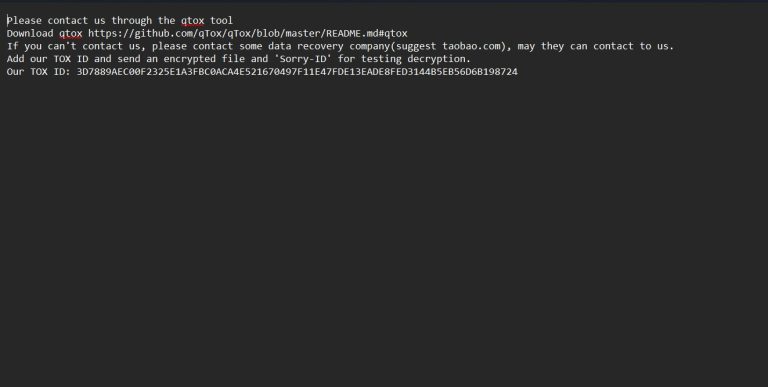
- alter filenames or distribute ransom notes,
- disable shadow copies or logs.
However, encryption is not guaranteed; many campaigns are data-only extortion events.
Key Indicators of Compromise (IOCs)
Kazu Leak Infrastructure
- Presence of your organization on Kazu’s Tor site.
- Mentions on Kazu Telegram channels.
Behavioral Patterns
- unusual database exports,
- unexpected administrative access,
- outbound data transfers to unknown hosts,
- long-duration privileged sessions.
System-Level Clues (If Encryption Is Present)
- ransom notes,
- changed wallpapers,
- modified file extensions,
- deletion of shadow copies.
Kazu Distribution Tactics
Kazu uses diverse infiltration methods, including:
- phishing campaigns targeting administrative personnel,
- exploiting unpatched vulnerabilities in government and enterprise portals,
- using stolen credentials harvested from earlier breaches,
- leveraging misconfigured cloud services or weak identity controls.
Its flexibility makes it a significant threat to government services, public-sector IT platforms, and data-heavy institutions.
Threat Summary: Why Kazu Is Dangerous
Kazu is dangerous because it:
- focuses on stealing data, not just locking it,
- weaponizes public exposure and reputational damage,
- targets critical and sensitive organizations worldwide,
- maintains active extortion channels (Tor + Telegram),
- uses leaks to pressure victims into compliance,
- and contributes to broader criminal ecosystems by selling stolen data.
This model results in long-term harm even after systems are restored.
Conclusion
Kazu relies on intimidation, not inevitability. Its threats are designed to force emotional decisions and quick payments. But when organizations choose structured response, technical clarity, and professional guidance, they gain the leverage back.
With Kazu Decryptor and disciplined IR processes, victims can:
- identify exactly what was stolen,
- fulfill regulatory obligations,
- communicate with transparency and control,
- rebuild systems securely,
- and refuse to support criminal extortion.
True recovery is not only about ending an incident—it is about transforming a moment of crisis into a stronger, more resilient future.
MedusaLocker Ransomware Versions We Decrypt