Zen Ransomware Decryptor
Zen ransomware has emerged as a serious cybersecurity menace, notorious for encrypting valuable data and holding it hostage until a ransom is paid. It targets a broad spectrum of systems, from personal computers to enterprise-level servers, leaving victims scrambling for solutions. This comprehensive guide explores the inner workings of Zen ransomware, the damage it can cause, and how to effectively recover from an attack using specialized tools like the Zen Decryptor.
Zen Ransomware Decryptor: An Effective Tool for Data Restoration
The Zen Decryptor Tool is a purpose-built utility designed to reverse the damage caused by Zen ransomware. It enables victims to regain access to their encrypted data without having to yield to ransom demands. Leveraging cutting-edge cryptographic techniques and secure server infrastructure, this tool offers a robust and dependable recovery process.
In addition to personal computers and enterprise setups, the Zen Decryptor is also compatible with NAS systems—including QNAP devices—provided that the encrypted data remains reachable.
Key Capabilities of the Zen Decryptor
Focused File Decryption
The tool is optimized to decrypt files affected by Zen ransomware. It supports files with extensions such as .id-9ECFA84E.[[email protected]].zen.
Secure, Cloud-Backed Recovery
Utilizing encrypted online servers, the decryptor ensures a safe data restoration process that maintains the integrity of your files.
Ease of Use
Whether you’re an IT expert or a novice user, the intuitive interface makes navigation and operation seamless.
Data Integrity Assurance
Unlike some tools that risk overwriting or deleting files, the Zen Decryptor carefully recovers encrypted content without any data loss.
Refund Policy
If the tool is unable to recover your files—a rare scenario—a full refund is guaranteed, providing users with peace of mind.
Zen Ransomware’s Assault on VMware ESXi Hypervisors
A specialized variant of Zen ransomware has been engineered to target VMware ESXi, a widely used hypervisor in virtualized infrastructures. This version of the malware infiltrates ESXi environments, encrypting hosted virtual machines and disrupting essential IT operations.
Attack Mechanics and Behavior
- Exploitation of ESXi Vulnerabilities
Zen ransomware exploits security flaws within ESXi to gain unauthorized access to virtual machines. - Advanced Dual-Layer Encryption
Using a combination of RSA (asymmetric) and AES (symmetric) encryption, the ransomware locks down VMs, rendering them inoperable. - Ransom Note Delivery
Cybercriminals typically demand payment in cryptocurrency and impose tight deadlines, threatening to destroy decryption keys if unmet.
Consequences for Virtual Infrastructures
- System Downtime: Organizations dependent on virtual servers may face extended periods of inactivity.
- Economic Fallout: Costs include ransom payments, IT recovery efforts, and business disruption.
- Data Exposure: Sensitive information stored in virtual environments may be exfiltrated and leaked.
Zen Ransomware’s Impact on Windows Server Environments
Zen ransomware also actively targets Windows-based servers, which are often foundational to business operations. These attacks can halt entire departments and cripple enterprise productivity.
Attack Strategy and Execution
- Weakness Exploitation
Zen leverages misconfigurations and outdated security patches in Windows Server installations to gain access. - File Lockdown Using Encryption
Once inside, it encrypts files with AES and RSA algorithms, making them inaccessible without a decryption key. - Cryptocurrency Demands
Victims receive ransom notes typically demanding Bitcoin payments in exchange for file restoration.
Effects on Businesses
- Irretrievable Data Loss: Without backups or a decryptor, affected files may remain locked permanently.
- Business Interruption: Critical operations may cease during the attack and recovery period.
- Brand Damage: Publicized breaches can erode customer trust and tarnish a company’s reputation.
Step-by-Step Instructions to Use the Zen Decryptor
To restore your encrypted files using the Zen Decryptor Tool, follow these instructions carefully:
- Secure Your Copy
Reach out via WhatsApp or email to obtain the decryptor tool. Once payment is confirmed, the tool will be immediately delivered. - Run as Administrator
Launch the application with administrative privileges to ensure it functions correctly. A stable internet connection is required for server communication. - Input Victim ID
Find the unique Victim ID included in the ransom note and enter it into the tool’s interface. - Begin Decryption
Start the decryption process. The tool will scan and restore encrypted files to their original state.
Note: A consistent internet connection is crucial, as the tool connects to secure servers for proper decryption.
Detecting a Zen Ransomware Infection
Early identification of a ransomware attack can greatly reduce data loss and system downtime. Be alert for the following red flags:
- Modified File Extensions
Files may be renamed with suffixes like .id-9ECFA84E.[[email protected]].zen. - Presence of Ransom Notes
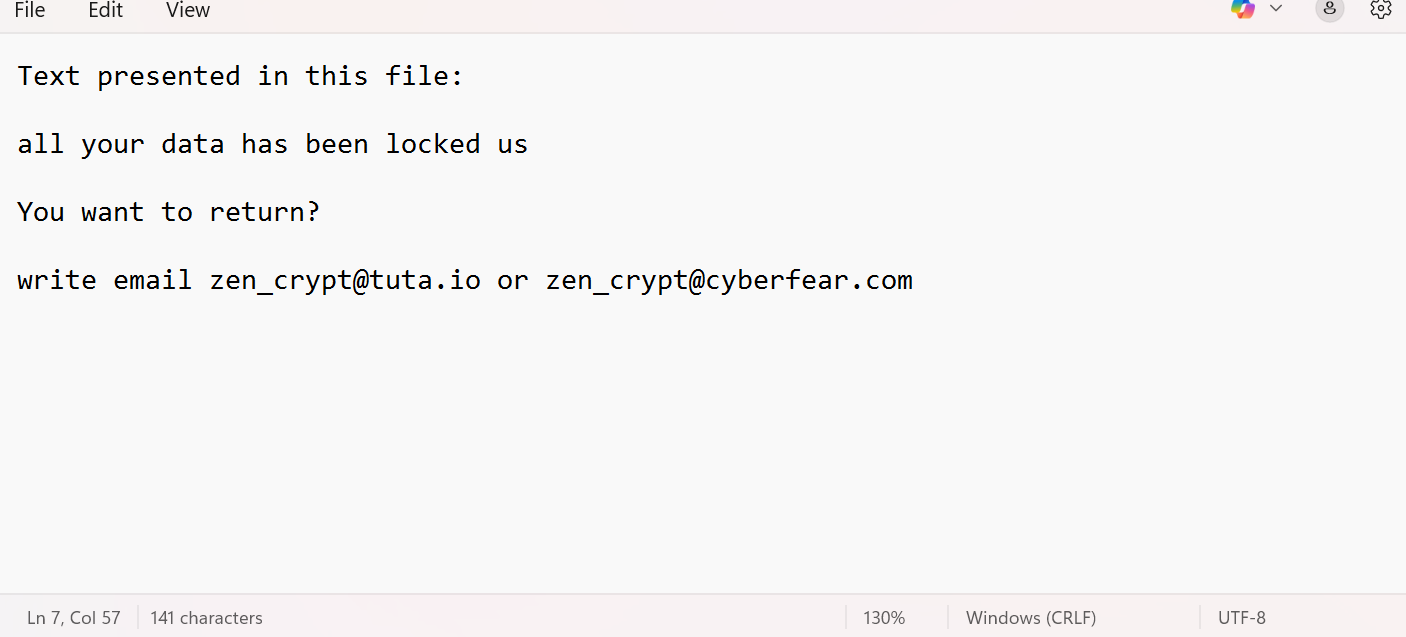
Files such as info.txt typically appear in directories, outlining payment demands and instructions.
Text presented in the txt file:
all your data has been locked us
You want to return?
write email [email protected] or [email protected]
Screenshot of the ransom note file:
- Performance Degradation
Systems may lag due to the high CPU and disk usage during the encryption process. - Unusual Network Behavior
Outbound traffic to unfamiliar domains may indicate communication with attacker-controlled servers.
Organizations Affected by Zen Ransomware
Zen ransomware has made its mark across diverse sectors, including healthcare, finance, education, and manufacturing. Victims often suffer severe disruptions, data loss, and reputational setbacks. These incidents underscore the need for robust cybersecurity frameworks and incident response planning.
Encryption Techniques Utilized by Zen Ransomware
Zen ransomware employs highly secure encryption methods that make file recovery nearly impossible without the correct decryption key:
- RSA (Asymmetric Encryption)
Encrypts data using a public-private key pair, ensuring only the attacker can decrypt files. - AES (Symmetric Encryption)
Used for fast and efficient encryption of large datasets with a singular, attacker-held key.
Cybersecurity Best Practices to Prevent Infection
To reduce the risk of falling victim to Zen or any other ransomware strain, organizations should implement the following strategies:
Regular System Updates
- Install security patches promptly for operating systems, hypervisors, and applications.
- Subscribe to vendor advisories for known vulnerabilities.
Access Control Measures
- Use multi-factor authentication (MFA) across all accounts.
- Limit user permissions based on job roles, and audit access logs routinely.
Network Security Architecture
- Isolate critical assets using network segmentation.
- Utilize firewalls and VLANs to restrict unnecessary connectivity.
Reliable Data Backups
- Implement the 3-2-1 backup rule: three copies of data, two different media, one off-site.
- Test backup systems regularly to ensure they can be restored when needed.
Advanced Endpoint Protection
- Deploy EDR (Endpoint Detection and Response) tools to monitor for malicious behavior in real-time.
Cybersecurity Education
- Train employees to identify phishing attempts, suspicious links, and social engineering tactics.
Intrusion Prevention Systems
- Use IDS/IPS solutions and real-time network monitoring tools to detect and block threats before they escalate.
Lifecycle of a Ransomware Attack
Zen ransomware typically follows a predictable attack sequence:
- Initial Entry: Often through phishing emails, RDP vulnerabilities, or unpatched software.
- File Encryption: Using AES and RSA, the malware locks files, making them inaccessible.
- Ransom Notification: A message is delivered, demanding cryptocurrency payments.
- Data Theft and Extortion: In some cases, attackers threaten to leak sensitive data if ransoms aren’t paid.
Ramifications of a Zen Ransomware Breach
The fallout from a ransomware attack can be severe and multifaceted:
- Service Interruptions: Business processes grind to a halt due to data inaccessibility.
- Monetary Damages: Costs include ransom payments, recovery tools, IT labor, and lost revenue.
- Regulatory and Reputational Impact: Data breaches can lead to legal consequences and loss of stakeholder trust.
Free Alternatives for Data Recovery
While the Zen Decryptor Tool is an effective solution, some victims may explore other recovery methods:
- No-Cost Decryptors: Check websites like NoMoreRansom.org for public decryption tools.
- Backups: Restore data from secure, offline backups.
- Shadow Copies: Recover previous file versions using Windows’ Volume Shadow Copy (if not deleted by the malware).
- System Restore: Revert the system to a state prior to the attack.
- File Recovery Software: Apps like Recuva or PhotoRec may help salvage fragments of unencrypted files.
Conclusion
Zen ransomware continues to pose a significant threat to digital infrastructures worldwide. However, with the right combination of preventive strategies, employee vigilance, and reliable recovery tools like the Zen Ransomware Decryptor, individuals and organizations can successfully defend against such attacks. Prioritizing cybersecurity not only mitigates risks but ensures that if an attack occurs, recovery is swift, secure, and effective—without needing to pay a ransom.
MedusaLocker Ransomware Versions We Decrypt