
Sicari Ransomware Decryptor
Alright, let’s cut the crap. Your network just got hit, and it wasn’t by some amateur script kiddie. You’re staring down the barrel of Sicari Ransomware, and this is a whole different beast. These guys aren’t just after your money; they’re on a mission, naming themselves after ancient assassins and offering bounties for hitting specific countries. They’ve got a custom builder and they’re coming for everything—Windows, Linux, your ESXi hosts, your NAS, everything.
This isn’t the time to panic. It’s time to fight back. This is your no-nonsense, 2026 battle plan. We’re going to break down exactly what you’re up against and give you the step-by-step plays to reclaim your network and leave these attackers with nothing.
Know Your Enemy: Deconstructing the Sicari Threat
You can’t beat an enemy you don’t understand. Sicari is a blend of tech-savvy and ideological fanaticism, which makes them dangerously unpredictable.
| Attribute | The Hard Truth |
|---|---|
| Threat Name | Sicari Ransomware (Sicarii) |
| Threat Type | Crypto-Ransomware, RaaS, Data Broker, Double Extortion |
| Platform | Windows, Linux, ESXi, Hyper-V, NAS, DAS (They hit it all) |
| Encrypted Files Extension | Varies, often .sicari or just scrambles files in place. |
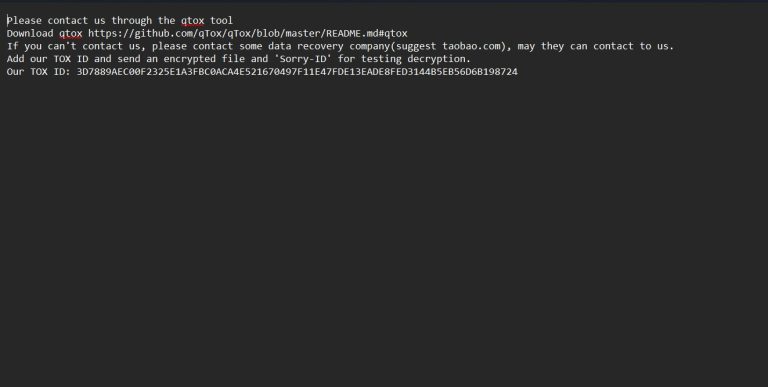
| Ransom Note | A text file designed to intimidate. |
| Free Decryptor? | Yes. Our specialized Sicari Decryptor is your first weapon. |
| Ransom Amount | Varies, with “premium bonuses” for attacks on specific countries. |
| Contact | Tox chat ID. They’re ghosts, but they can be beaten. |
| Detection Names | Your AV will probably call it a generic Ransomware or Trojan. |
The Ideological Edge: Why They’re More Dangerous
Most ransomware gangs are just greedy. Sicari is different. The name, the Hebrew-language leak site, and the explicit bonuses for attacking certain countries scream ideology. This isn’t just business for them; it’s a cause. Why does that matter to you? Because ideologically driven attackers are more likely to destroy your data out of spite, even if you pay. Paying them is a massive gamble with terrible odds.
Their Playbook: How They Got In and Wrecked Your Day
Understanding their Tactics, Techniques, and Procedures (TTPs) is how you start to turn the tide.
Indicators of Compromise (IOCs): The Clues They Left Behind
- Cross-Platform Chaos: Encrypted files on your Windows desktops and your Linux servers? That’s a huge red flag for Sicari.
- Ransom Note Artifact: The presence of a text file with their demands.
- Tox Communication: A Tox chat ID in the note is their preferred way to stay anonymous.
- Data Leak Site (DLS): They’ll give you a link to their dark web site to prove they stole your data.
MITRE ATT&CK TTPs: The Enemy’s Maneuvers
- Initial Access (TA0001): They didn’t kick in the front door; they picked the lock. Think unpatched VPNs, firewall vulnerabilities, or stolen credentials bought on the dark web.
- Execution (TA0002): They use your own tools against you—PowerShell on Windows, Bash on Linux—to run their malicious code without raising alarms.
- Lateral Movement (TA0008): Once inside, they spread like wildfire. They use SMB shares to hop between Windows machines and SSH to compromise your Linux servers.
- Impact (TA0040): This is the knockout punch. They encrypt everything (T1486), delete your backups and snapshots to prevent recovery (T1490), and threaten to leak your data on their DLS (T1565.001).
The Counter-Attack: Your Multi-Platform Recovery Playbook
This is where we go on the offensive. We have multiple plays to run, and we’ll execute them until we win.
The Direct Decryption Solution: Your Silver Bullet
This is the fastest way to victory. If we can break their encryption, you get your data back without paying a cent.
Our Specialized Sicari Decryptor: Your First Weapon
Our team has been in the trenches fighting groups like Sicari. We’ve developed a specialized decryptor that can often crack their code and restore your files.
Your Step-by-Step Mission:
- Step 1: Triage the Battlefield: Confirm the ransom note and the file-naming pattern on all affected systems. Grab the unique Tox ID from the note.
- Step 2: Lock It Down: CRITICAL: Disconnect every single affected system from the network. Cut them off. Isolate your backup servers immediately—they are your most valuable asset right now.
- Step 3: Send in Recon: Send us a few encrypted sample files (under 5MB) from different platforms (Windows, Linux) and the ransom note. This lets us confirm the exact strain and build the right key.
- Step 4: Deploy the Weapon: On a clean, isolated machine, launch our Sicari Decryptor with admin rights. It will securely connect to our servers to analyze the attack.
- Step 5: Enter the Target ID: Use the unique Tox ID from the ransom note. This is the signature we need to generate a custom decryption profile for your specific attack.
- Step 6: Execute the Recovery: Once initiated, the decryptor takes over. It verifies file integrity and automatically restores your data, right where it belongs.
Platform-Specific Recovery: Reclaiming Every Inch of Your Territory
Sicari hits everywhere, so we need to be ready to fight on every front.
The Gold Standard: Backup Restoration
If the decryptor isn’t an option, your backups are your fortress. This is the most reliable way to win.
If you’re using a solution like Veeam, you’re in a strong position. Veeam’s immutable backups can’t be touched by the ransomware, and its features like Cleanroom Recovery are designed for exactly this kind of disaster. Learn more at the official Veeam website.
- Windows Systems:
- File Versions (Shadow Copies): The attackers tried to delete these, but sometimes they miss a few. Right-click an encrypted file, go to
Properties > Previous Versions, and see if you can turn back time.
- File Versions (Shadow Copies): The attackers tried to delete these, but sometimes they miss a few. Right-click an encrypted file, go to
- Linux Systems:
- Rsync/Bacula Backups: Check your backup repositories. If they weren’t mounted during the attack, your data should be safe.
- LVM Snapshots: If you use LVM, check for any snapshots taken before the infection. It’s a long shot, but worth a look.
- NAS (Network Attached Storage):
- Cloud Sync Versioning: If your NAS was syncing to Google Drive, Dropbox, or OneDrive, get into those cloud services and use their version history to restore files from before the attack.
- Snapshot Technology: This is your NAS’s superpower. If you have a Synology or QNAP, check their snapshot management immediately. The attackers try to wipe them, but if you’re fast, you might catch a break.
- DAS (Direct Attached Storage):
- External Drive Backups: If you backed up this DAS to another external drive, find that drive. As long as it wasn’t connected to an infected machine, it’s your gold mine.
- ESXi and Hyper-V Hypervisors:
- VM-Level Backups: If you’re using Veeam, Nakivo, or another image-level backup tool, you can restore entire VMs to a point-in-time before the attack. This is often the cleanest way to get back online.
- VM Snapshots: Check your vSphere or Hyper-V manager for any existing snapshots. The attackers likely tried to delete them, but it’s a critical check.
- Storage-Based Snapshots: If your VMs are on a SAN or NAS, you might be able to revert the entire datastore to a pre-attack snapshot.
The Last Stand: Data Recovery Software
This is the hail mary. It has a low chance of success against modern ransomware, but if you have no other options, it’s better than nothing.
- EaseUS Data Recovery Wizard: A solid user-friendly option. Find it at the EaseUS website.
- Stellar Data Recovery: A powerful tool for deep scanning. Find it at the Stellar Data Recovery official site.
- TestDisk & PhotoRec: These are free, powerful, open-source tools. PhotoRec is especially good at carving out specific file types from a corrupted drive. Find them on the CGSecurity website.
The Last-Ditch Procedure:
- DO NOT WRITE ANYTHING to the infected drives. Every new byte written could overwrite the data you’re trying to save.
- Pull the Plug: Physically remove the hard drives from the infected machines.
- Connect to a Clean Machine: Use a USB-to-SATA adapter or install the drives as a secondary disk in a known-good computer.
- Run the Recovery Tool: Scan the drives from the clean machine. Be prepared for the possibility that it finds nothing, but you have to try.
Fortifying the Castle: Post-Recovery and Future-Proofing
Winning the battle is only half the war. Now we have to make sure this never happens again.
- Step 1: Verify Your Victory: Spot-check restored files to ensure they’re not corrupted.
- Step 2: Scour the Battlefield: Run a full, deep scan of your entire restored environment with a top-tier antivirus to root out any lingering malware.
- Step 3: Change the Locks: Assume every password is compromised. Force a reset for all user, admin, service, and cloud accounts. Use a password manager to generate strong, unique passwords.
- Step 4: Patch the Walls: Update every OS and every third-party application across your entire network. Close the holes they used to get in.
- Step 5: Reconnect with Caution: Bring systems back online one by one and monitor network traffic like a hawk for any signs of unusual activity.
- Step 6: Build a Better Fortress: Implement or strengthen a 3-2-1 backup strategy (3 copies, 2 media types, 1 off-site). Test your backups regularly. An untested backup is not a backup; it’s a hope.
- Step 7: Conduct a Post-Mortem: Figure out exactly how they got in. Was it a phishing email? An unpatched server? Use that painful knowledge to train your users and harden your defenses.
Conclusion
The Sicari ransomware attack is a brutal, business-threatening event. They want you to feel isolated, overwhelmed, and desperate enough to pay. But you are not helpless. A calm, strategic, and aggressive response focused on containment and recovery is how you win. The path to true resilience starts with a multi-layered security posture: advanced endpoint protection, strict network segmentation, and a disciplined, immutable 3-2-1 backup strategy. Paying the ransom only funds their next attack. By understanding their playbook and preparing your defenses, you can transform this catastrophe into a hard-won lesson, emerging from the siege stronger, smarter, and more secure than ever before.
MedusaLocker Ransomware Versions We Decrypt