Cyberex Ransomware Decryptor
Cyberex, an unofficial Chaos variant, exemplifies modern ransomware threats: infiltrating systems, encrypting critical files with the .LOCKEDBYCR extension, and dropping a ransom note titled README.LOCKEDBYCR.txt. This guide dives into Cyberex’s behavior, effects, and recovery—especially using our Cyberex Decryptor Tool for a safe and effective resolution.
Cyberex Decryptor Tool: A Reliable Recovery Solution
Our specialized Cyberex Decryptor Tool is specifically tailored to combat the Chaos variant, offering a safe and streamlined recovery path without the need to pay ransom. Here’s what makes it stand out:
- Targeted Decryption: Expertly handles files marked .LOCKEDBYCR.
- Secure, Remote Process: Connects to hashed online servers to preserve data integrity.
- User-Friendly Interface: No deep technical know-how required.
- Guaranteed Safety: No deletion or further corruption of files.
- Refund Assurance: Get your money back if decryption fails.
Moreover, the tool supports data recovery from QNAP and other NAS devices, provided the encrypted volumes can still be accessed over the network.
Cyberex Ransomware Attack on VMware ESXi
This Chaos variant is engineered to cripple VMware ESXi environments:
- ESXi Targeting: Exploits hypervisor weaknesses to encrypt all hosted VMs.
- High-Level Encryption: Utilizes AES + RSA methodologies for data locking.
- Aggressive Extortion: Demands cryptocurrency with threats to destroy keys after a deadline.
- Severe Damage:
- Operational Downtime: Entire virtual environments grind to a halt.
- Financial Loss: Ransom demands plus recovery costs add up.
- Data Exposure: Sensitive VM-stored data could be leaked.
- Operational Downtime: Entire virtual environments grind to a halt.
Cyberex Ransomware Attack on Windows Servers
Cyberex also targets traditional Windows servers:
- Vector of Entry: Exploits server misconfigurations, weak admin credentials, or email scams.
- Encryption Methods: Employs AES/RSA to lock down server files and databases.
- Ransom Demand: Victims receive the README.LOCKEDBYCR.txt note, urging crypto payment.
- Devastating Impact:
- Loss of critical files
- Halted business operations
- Compliance and reputational risk
- Loss of critical files
How to Use the Cyberex Decryptor Tool
- Acquire the Tool
Reach out via WhatsApp or email to initiate secure purchase and receive download link. - Run as Administrator
Execute the tool with admin privileges; internet access is mandatory for key retrieval. - Enter Victim ID
This ID appears in README.LOCKEDBYCR.txt and ensures correct decryption. - Start Decryption
Click to begin; the tool restores files to their pre-encrypted state.
Identifying a Cyberex Ransomware Attack
Quick detection can minimize fallout:
- File Extension Change: .LOCKEDBYCR appears on encrypted files.
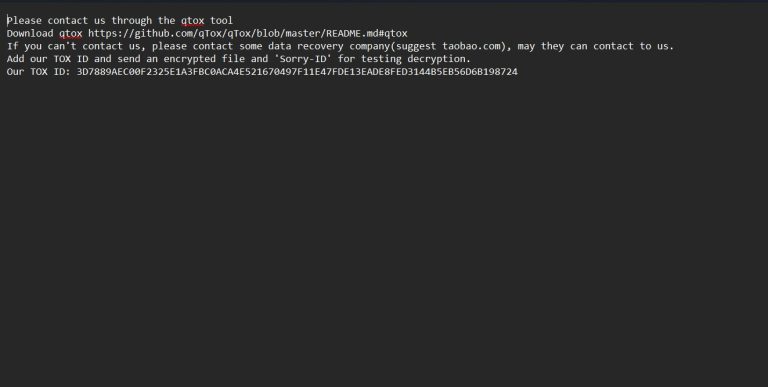
- Ransom Note: README.LOCKEDBYCR.txt appears in affected directories.
Ransom note message:
Your organization has been impacted by a Hacker’s attack!
All Your Files has been Encrypted.
We are using Military Grade Encryption Algorithms.
That means the files can’t be decrypted without our decryption tool.
Valuble Data has been copyed to OUR Servers.
To recover your data and prevent data leakage you must contact us within 48 hours.
To start negotiating you need to download:
https://www.torproject.org/download
Then open one of link below to start Chat:
<.onion links redacted>
You have no choice other than to negotiate with us.
Screenshot of the ransom note:

- Slow Systems: Encryption spikes CPU/disk usage.
- Outbound Traffic: Suspicious network connections indicate ransomware activity.
Victims of Cyberex Ransomware
Various sectors—including healthcare, finance, and manufacturing—have reported attacks involving Chaos variants like Cyberex. These incidents highlight the importance of robust cybersecurity and quick incident response.
Encryption Methods Used by Cyberex
- AES: Encrypts each file individually using strong symmetric keys.
- RSA: Encrypts AES keys using the attacker’s public key—making decryption without the private key virtually impossible.
Best Practices for Protection
Keep ESXi, Windows servers, and all software current with vendor security advisories.
Enforce strong passwords and Multi-Factor Authentication (MFA); restrict RDP to trusted endpoints.
Employ VLANs and firewalls; disable unnecessary services like open SMB and public RDP.
Adopt the 3-2-1 rule: 3 copies, 2 media types, 1 off-site. Regularly test recovery.
Deploy EDR tools and modern anti-malware; monitor for anomalies in ESXi and Windows environments.
Train staff in phishing awareness and safe computing.
Use IDS/IPS, firewall protections, network monitoring, and maintain a tested incident response plan.
Attack Cycle of Cyberex Ransomware
- Infiltration via phishing, RDP weakness, or software vulnerability.
- Privilege Escalation to gain necessary permissions.
- Lateral Movement to spread across networks or VMs.
- Encryption using AES and RSA techniques.
- Ransom Note Drop: README.LOCKEDBYCR.txt appears.
- Extortion & Threats: Payment demanded or files/data leaked.
- Possible Data Leak: Threats of publishing exfiltrated data if unpaid.
Consequences of a Cyberex Attack
- Operational Disruption: Critical services halt.
- Financial Strain: Ransom, recovery, and downtime costs are substantial.
- Reputational Damage: Breaches result in lost trust and regulatory fines.
Free Alternative Recovery Methods
- Visit NoMoreRansom.org for free decryptors.
- Recover from Offline Backups.
- Use Windows Shadow Copies via vssadmin.
- Restore via System Restore Points in Windows.
- Try data recovery with Recuva or PhotoRec.
- Consult Experts (e.g., CERT or law enforcement agencies).
Conclusion
Cyberex—an aggressive Chaos variant—poses a high threat to both virtual and physical systems. Though encryption is secure, our Cyberex Decryptor Tool, combined with strong cybersecurity practices, enables recovery without capitulating to ransom demands. Proactive defense, reliable backups, and rapid incident response are your best shields against Cyberex and other ransomware threats.
MedusaLocker Ransomware Versions We Decrypt