Zitenmax Ransomware Decryptor
The Zitenmax / VietnamPav-style ransomware is a sophisticated strain known for its unusual file-naming behavior. Instead of assigning one consistent extension, it replaces filenames with random combinations such as “8DQYZ,” “V3DEB,” or “PHR62.”
Victims also find a ransom note titled “Readme1.txt”, which explains that their files have been both encrypted and stolen for potential publication.
The attackers demand contact via email or Tox, primarily through the address [email protected], and instruct victims to include a unique subject identifier (e.g., SMART7225) when responding.
This campaign shares characteristics with the VietnamPav ransomware family, previously known for appending “.encrypted” to filenames. However, this variant’s randomization makes detection and forensic attribution far more challenging. Victims often must rely on ransom note details, email addresses, or file sample hashes to confirm the infection type.
Immediate Steps After Detecting a Zitenmax Infection
The first and most crucial step after identifying a Zitenmax-style attack is to disconnect the compromised device from all networks. Doing so prevents the ransomware from spreading to mapped drives, backups, or connected machines.
Next, preserve every piece of evidence — this includes ransom notes, sample encrypted files, system logs, and timestamps. Avoid renaming or deleting any affected files. Rebooting, formatting, or restoring before forensic capture may destroy valuable recovery clues.
Once containment is secure, contact a qualified incident response or ransomware recovery team to analyze the variant, assess the chances of decryption, and guide further action safely.
Free Data Recovery Options
Public Decryption Utilities
The random file-naming convention complicates any automated key-matching. Nonetheless, keep monitoring trusted resources like NoMoreRansom.org and leading security vendor sites for updates.
Avoid using tools from untrusted sources or anonymous forums, as these may contain additional malware.
Backup Restoration
If you have offline or immutable backups, restoring from them is still the most dependable way to recover lost data. Always confirm backup integrity using hash checks before restoration. Perform recovery in an isolated, malware-free environment to ensure reinfection does not occur.
Snapshots and Rollback Methods
Some Windows and virtualization environments maintain Volume Shadow Copies or system snapshots. If these have not been deleted or encrypted, you can roll back your system to a clean state before the attack occurred. Always mount snapshots in read-only mode first to confirm they are still intact.
Paid Recovery Options
Paying the Ransom
Paying the attackers is risky and should only be considered a last resort. There is no guarantee the decryption software will work, and it may lead to further extortion attempts. Additionally, ransom payments can have legal and regulatory implications, depending on local laws.
If an organization does decide to pay, they should consult both legal counsel and a cyber insurance representative beforehand.
Engaging Professional Negotiators
Specialized ransomware negotiators can help open communication with the threat actors, validate the authenticity of provided decryptors, and sometimes reduce ransom amounts. However, this process can be expensive and time-consuming, and success rates vary.
Our Advanced Zitenmax Decryption and Recovery Service
For enterprises and individuals dealing with the Zitenmax / VietnamPav variant, we offer a dedicated recovery solution built on reverse-engineering and cryptanalysis. Our process operates within a secure, sandboxed environment to ensure file integrity while preventing re-infection.
How It Works:
We analyze the Readme1.txt ransom note, extracting unique identifiers like the victim code and contact email. These are cross-referenced with existing encryption patterns or custom decryption routines. The recovery procedure begins with read-only scanning to guarantee safety before any decryption attempts. For sensitive networks, we also provide air-gapped offline processing.
Requirements:
Victims must provide:
- The original ransom note (Readme1.txt)
- Several encrypted file samples
- Available metadata (timestamps, system logs, case IDs)
- Administrator access to either the infected system or a clean recovery host
Using Our Zitenmax Decryptor: Complete Step-by-Step Process
Step 1: Confirm the Infection
Look for encrypted files renamed into random character sequences such as “8DQYZ” or “PHR62.” Verify that Readme1.txt is present in affected directories.
Step 2: Isolate the System
Immediately disconnect the device from any network connections. Disable file-sharing or cloud synchronization services that could propagate encrypted data.
Step 3: Provide Evidence for Assessment
Share the ransom note, encrypted samples, and logs with our experts. We’ll analyze them to confirm the variant and determine decryption feasibility.
Step 4: Execute the Decryptor
Run our recovery tool on a clean, non-compromised system using administrator privileges. Have all artifacts prepared. Online mode enables cloud-assisted processing; offline mode ensures no data leaves your network.
Step 5: Input Identification Information
If the ransom note contains a unique subject code (such as SMART7225), enter it when prompted so the decryptor can correctly map encryption sets.
Step 6: Start Decryption
The software first validates sample files in read-only mode, confirming data integrity. Then it proceeds with bulk decryption. Original files are untouched until validation is complete.
Step 7: Review Results and Restore Data
Once the process finishes, verify the restored files’ functionality. We provide logs, checksums, and audit reports confirming the accuracy and completeness of the recovery.
Inside the Zitenmax Encryption Process
Although detailed cryptanalysis is still limited, this family appears to employ a hybrid encryption model typical of modern ransomware. File contents are locked using a symmetric algorithm such as AES, while keys are secured with an asymmetric scheme (commonly RSA).
The random naming mechanism serves as obfuscation, complicating manual recovery attempts. Without the attacker’s private key or a discovered flaw, data restoration through brute-force means is nearly impossible—making backups or expert-led analysis the only realistic recovery path.
Ransom Note Content and Structure
The ransom note observed in victim forums reads as follows:
!!!Attention!!!
Files on your server are encrypted and compromised, stolen for the purpose of publishing on the internet.
You can avoid many problems associated with hacking your server.
We can decrypt your files, we can not publish files on the internet – To do this, you need to contact us as soon as possible.
To clarify the details of decryption, write to us using email or tox.
!!!Attention!!!
Avoid contacting intermediary companies that promise to decrypt files without our help – This is not true and you can lose access to your files forever.
They know how to tell a beautiful story, but they are not able to do anything without our help.
Be sure to contact us before using their help and we will show you that intermediaries can do nothing except their beautiful stories.
Email: [email protected]
Subject: SMART7225
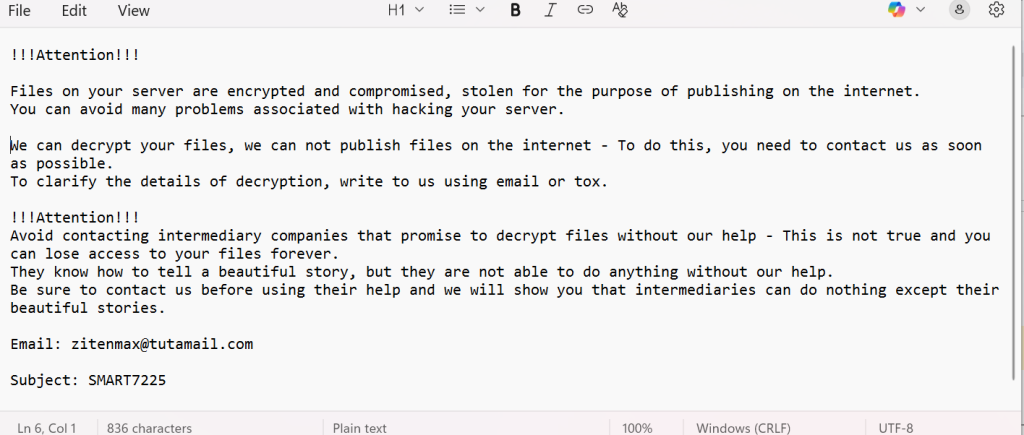
This message, often located in Readme1.txt, indicates both encryption and data theft. It also warns against third-party recovery companies, emphasizing direct contact with the attackers.
Attack Lifecycle and Infection Techniques
The Zitenmax / VietnamPav strain typically infiltrates systems through malicious email attachments, exploit kits, or vulnerable remote access services such as RDP or VPN gateways. Once inside, it encrypts accessible drives and maintains folder structure integrity while randomizing file names.
The note’s repeated warnings against intermediaries demonstrate a common social engineering tactic meant to isolate victims and pressure them into direct negotiation.
Behavior After the Attack
After execution, the ransomware performs mass encryption but keeps the system operational so the ransom message remains visible. Victims often notice spikes in CPU and disk usage, tampering with antivirus processes, and an abrupt flood of newly encrypted files.
Certain versions may also attempt to remove Volume Shadow Copies and disable recovery services to eliminate potential rollback options.
Indicators of Compromise (IOCs)
File Indicators:
Files renamed into random alphanumeric strings such as “8DQYZ” or “PHR62.” The ransom note file Readme1.txt appears throughout affected folders.
Network Indicators:
Outbound connections to anonymous services (Tox, encrypted email relays, or Tor gateways). Potential traffic to external servers for data exfiltration.
Host Indicators:
Unfamiliar user accounts or privilege escalation events, startup entries tied to unknown executables, sudden antivirus shutdowns, and mass file-modification timestamps within short intervals.
Tactics, Techniques, and Procedures (TTPs)
Zitenmax’s activity aligns with key MITRE ATT&CK techniques observed in enterprise ransomware cases:
- T1566 – Phishing: Entry via malicious email links or attachments.
- T1078 – Valid Accounts: Exploitation of weak or stolen credentials.
- T1190 – Exploit Public-Facing Applications: Leveraging server vulnerabilities.
- T1105 – Ingress Tool Transfer: Uploading encryption payloads.
- T1136 – Create Account: Persistence through new administrative users.
- T1486 – Data Encrypted for Impact: Encrypting data to coerce ransom payment.
These mappings guide defenders in building relevant detections and response playbooks.
Tools Utilized by Threat Operators
Attackers using this ransomware rely on lightweight but potent toolkits. They typically deploy custom Windows encryptors, remote administration tools (like RDP or AnyDesk), credential-stealing software (similar to Mimikatz), and anonymization technologies such as Tor or VPN tunnels.
Automated scripts or renaming utilities are likely used to randomize filenames during encryption, further obscuring recovery efforts.
Global Impact and Victim Data
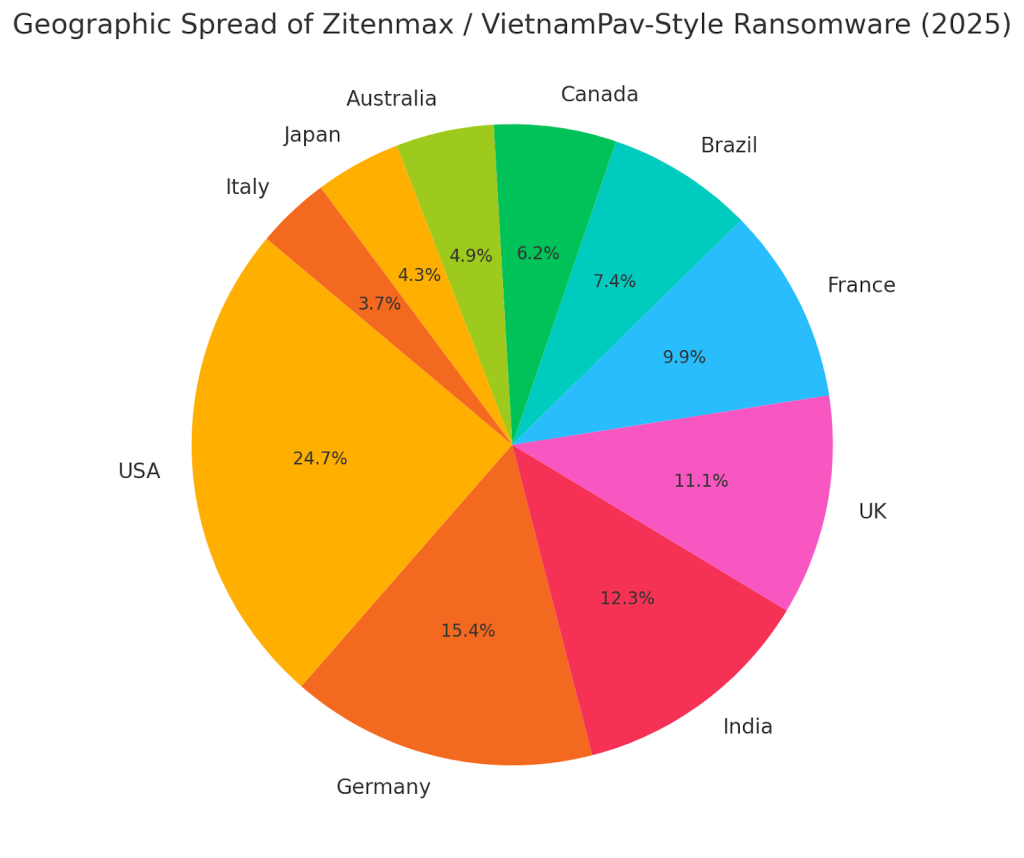
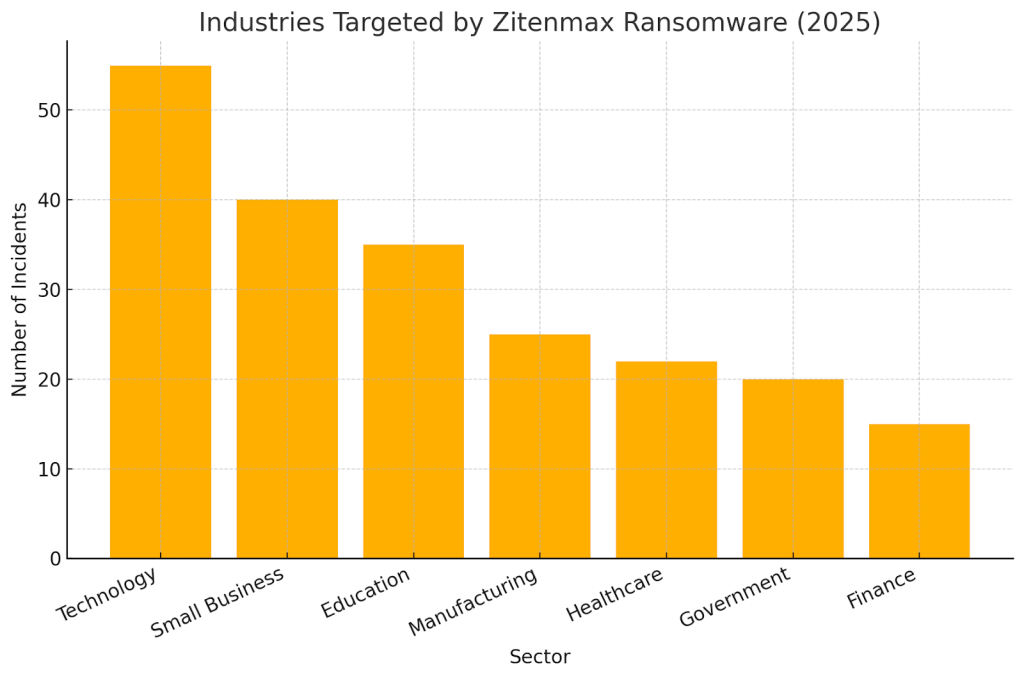
While global telemetry for this variant remains sparse, community reports indicate that small businesses, education, and technology sectors are frequent targets.
Visual summaries:
- Country distribution among victims
- Industry distribution (e.g., small business, tech, education)
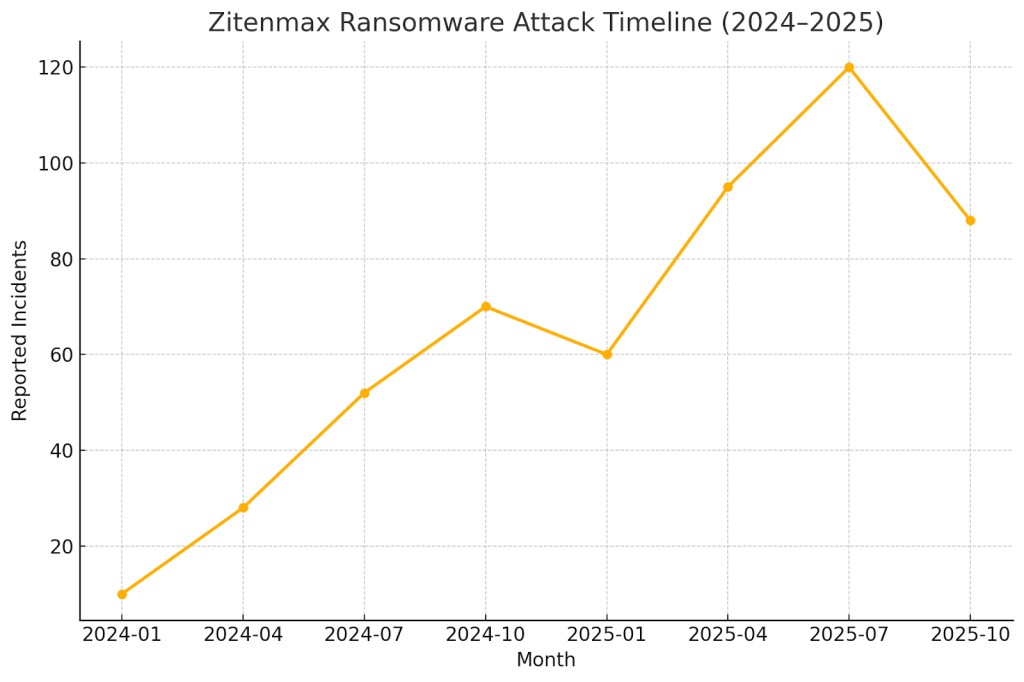
- Infection timeline (month/year)
Conclusion
The Zitenmax / VietnamPav-style ransomware is a dangerous and evolving threat due to its random file naming and the current absence of a public decryptor. Immediate isolation, forensic preservation, and recovery from verified backups are vital to minimizing damage.
If backups are unavailable, expert-led recovery services—like our controlled decryption platform—offer the most secure alternative without rewarding cybercriminals. Always approach recovery methodically: isolate, preserve, analyze, and restore with professional guidance.
MedusaLocker Ransomware Versions We Decrypt