BlackFL Ransomware Decryptor
In recent years, BlackFL ransomware has emerged as one of the most significant and destructive cybersecurity threats. Capable of infiltrating systems, encrypting critical files, and demanding a ransom for decryption, BlackFL has severely impacted a range of organizations, from healthcare providers to financial firms. This guide provides an in-depth examination of BlackFL ransomware, its attack mechanisms, and most importantly, how to recover encrypted files without paying the ransom. With the BlackFL Decryptor Tool, victims now have a reliable and efficient method to restore their data.
What is BlackFL Ransomware?
BlackFL is a type of ransomware, which is a malicious software designed to encrypt files and demand a ransom payment from the victim. Once executed, it encrypts essential files on the victim’s system and appends the “.BlackFL” extension to them. For example, a file named “invoice.docx” becomes “invoice.docx.BlackFL”.
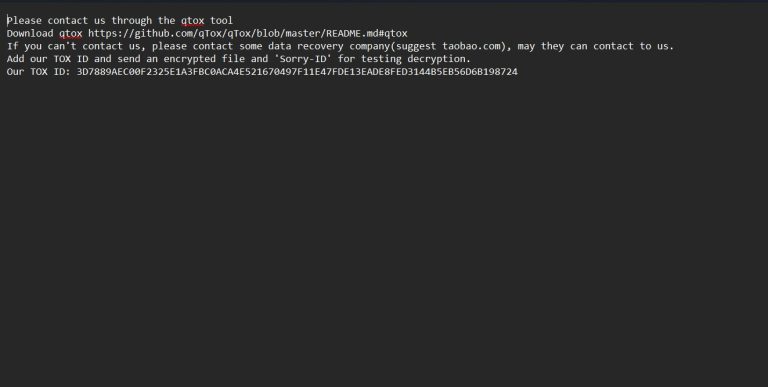
The ransomware often leaves a ransom note titled BlackField_ReadMe.txt, which contains instructions on how to contact the cybercriminals and make payment, typically in cryptocurrency. Additionally, the attackers often claim to have stolen sensitive data before encrypting the files, threatening to leak it on the dark web if the ransom is not paid.
BlackFL Ransomware Decryptor Tool: The Key to Data Recovery
The BlackFL Decryptor Tool has been designed to assist victims of BlackFL ransomware in recovering their encrypted files without having to pay the attackers. This specialized tool uses advanced decryption algorithms, hosted on secure online servers, to decrypt files that have been locked by BlackFL ransomware.
Key Features of the BlackFL Decryptor Tool
- Targeted Decryption: The tool can decrypt files encrypted by BlackFL ransomware, even those with the “.BlackFL” extension.
- Secure Recovery Process: The tool utilizes secure online servers to handle decryption, ensuring the integrity of the data.
- User-Friendly Interface: The tool is easy to navigate, allowing users with various technical skill levels to use it effectively.
- Guaranteed Safety: The decryptor does not corrupt or delete any existing data during the recovery process.
- Money-Back Guarantee: If the tool fails to decrypt files, users can get a refund, providing peace of mind.
The Impact of BlackFL Ransomware on Virtualized Environments
BlackFL ransomware has a variant specifically designed to target VMware ESXi servers, which are widely used in virtualized IT infrastructures. This variant exploits vulnerabilities in the ESXi hypervisor to gain access to virtual machines (VMs) and encrypts their files. The encrypted VMs are rendered unusable until a ransom is paid, leading to severe operational disruption.
Key Features and Modus Operandi of BlackFL on ESXi
- Exploitation of ESXi Vulnerabilities: BlackFL takes advantage of flaws in the ESXi hypervisor to infiltrate virtualized systems.
- Advanced Encryption: The ransomware uses RSA and AES encryption algorithms to lock virtual machines, making them inaccessible.
- Ransom Demands: Victims are pressured to pay in cryptocurrency, with a strict deadline, or risk the permanent deletion of the decryption keys.
Consequences for ESXi Environments
- Operational Downtime: Entire networks dependent on virtualized environments may experience prolonged disruption.
- Financial Loss: Organizations face substantial costs from ransom payments, data recovery efforts, and lost productivity.
- Data Breaches: Sensitive data stored within virtual machines may be exfiltrated, leading to potential leaks and breaches.
BlackFL Ransomware Attack on Windows Servers
BlackFL ransomware is also a significant threat to Windows servers, which are commonly used to store sensitive organizational data and manage critical business operations. These servers become high-value targets for cybercriminals, especially those with access to proprietary and confidential information.
Key Features and Techniques of BlackFL on Windows Servers
- Vulnerability Exploitation: BlackFL takes advantage of weaknesses in Windows Server configurations to gain unauthorized access.
- Data Encryption: BlackFL uses AES and RSA encryption methods to lock critical data stored on the server.
- Ransom Demands: Victims are pressured to pay in Bitcoin, with a warning that the decryption keys will be deleted if the payment is not made.
Risks and Impact on Windows Servers
- Data Loss: Without proper backups or decryption tools, encrypted files may remain inaccessible.
- Operational Disruption: Prolonged downtime may leave businesses unable to operate effectively.
- Reputational Damage: A data breach or extended downtime can severely damage customer trust and lead to regulatory penalties.
How to Use the BlackFL Decryptor Tool: A Step-by-Step Guide
The BlackFL Decryptor Tool is straightforward to use, offering a quick and efficient way to recover encrypted files.
Contact the provider securely through WhatsApp or email to purchase the Decryptor Tool. Upon confirmation, you will be provided access to the tool.
To ensure optimal performance, launch the BlackFL Decryptor with administrative access. Ensure your system has an active internet connection as the tool interacts with secure servers.
Locate the Victim ID from the ransom note (BlackField_ReadMe.txt) and input it into the tool. This ID ensures that the decryption process is tailored to your specific attack.
Initiate the decryption process and allow the tool to restore your encrypted files. The tool works quickly and efficiently to undo the damage caused by BlackFL ransomware.
Once the decryption is complete, verify that all your files have been successfully restored and are fully accessible.
Identifying a BlackFL Ransomware Attack
Early detection is crucial in mitigating the impact of BlackFL ransomware. Here are some telltale signs that your system may be infected:
- Renamed Files: Files are typically renamed with the .BlackFL extension or similar variants.
- Ransom Notes: The file BlackField_ReadMe.txt appears on the system, containing ransom demands and contact information.
The typical ransom note reads:
Hi friends,
Whatever who you are and what your title is if you’re reading this it means the internal infrastructure of your company is fully or partially
dead, all your backups – virtual, physical – everything that we managed to reach – are completely removed. Moreover,
we have taken a great amount of your corporate data prior to encryption.
Well, for now let’s keep all the tears and resentment to ourselves and try to build a constructive dialogue.
We’re fully aware of what damage we caused by locking your internal sources. At the moment, you have to know:
1. Dealing with us you will save A LOT due to we are not interested in ruining your financially. We will study in depth your finance,
bank & income statements, your savings, investments etc. and present our reasonable demand to you. If you have an active cyber insurance,
let us know and we will guide you how to properly use it. Also, dragging out the negotiation process will lead to failing of a deal.
2. Paying us you save your TIME, MONEY, EFFORTS and be back on track within 24 hours approximately.
Our decryptor works properly on any files or systems,
so you will be able to check it by requesting a test decryption service from the beginning of our conversation. If you decide to recover on your own,
keep in mind that you can permanently lose access to some files or accidently corrupt them – in this case we won’t be able to help.
3. The security report or the exclusive first-hand information that you will receive upon reaching an agreement is of a great value,
since NO full audit of your network will show you the vulnerabilities that we’ve managed to detect and used in order to get into,
identify backup solutions and upload your data.
4. As for your data, if we fail to agree, we will try to sell personal information/trade secrets/databases/source codes – generally speaking,
everything that has a value on the darkmarket – to multiple threat actors at ones. Then all of this will be published in our blog –
5. We’re more than negotiable and will definitely find the way to settle this quickly and reach an agreement which will satisfy both of us.
If you’re indeed interested in our assistance and the services we provide you can reach out to us following simple instructions:
Primary email : [email protected] use this as the title of your email –
Secondary email(backup email in case we didn’t answer you in 24h) : [email protected] , TELEGRAM: @gotchadec
Keep in mind that the faster you will get in touch, the less damage we cause.

- Performance Issues: You may notice abnormal CPU or disk activity as the ransomware encrypts files.
- Network Activity: Unusual outbound traffic patterns may indicate communication with the ransomware’s command-and-control servers.
TTPs (Tactics, Techniques, and Procedures) of BlackFL Ransomware
BlackFL ransomware uses a variety of sophisticated tactics and techniques to infiltrate and compromise systems:
- T1071.001 – Application Layer Protocol: BlackFL often enters systems via phishing emails or malicious ads.
- T1021.001 – Remote Desktop Protocol (RDP): The ransomware also exploits unprotected RDP connections to gain access.
- T1203 – Exploitation for Client Execution: Once inside, the malware executes by tricking the victim into interacting with a malicious attachment or file.
- T1543.003 – Windows Service: BlackFL configures itself to persist within the system by running as a service.
- T1078.001 – Valid Accounts: The ransomware uses valid credentials (often through credential dumping tools like Mimikatz) to escalate privileges.
- T1070.004 – File Deletion: BlackFL frequently deletes volume shadow copies to prevent recovery using native tools.
- T1486 – Data Encrypted for Impact: The final impact involves encrypting files, rendering them inaccessible until the ransom is paid.
IOCs (Indicators of Compromise)
Here are some key Indicators of Compromise (IOCs) associated with BlackFL ransomware:
- File Extensions: Files encrypted by BlackFL typically have the extension .BlackFL.
- Ransom Note: The ransom note is named BlackField_ReadMe.txt.
- Email Addresses: The ransomware operators use the email addresses [email protected] and [email protected] for communications.
- Telegram Username: @gotchadec (used by the attackers for contact).
- IP Addresses: Investigating network traffic may reveal communication with known malicious IP addresses related to the ransomware.
- Registry Changes: BlackFL may create specific registry entries to persist on the system.
Tools Used by BlackFL Ransomware
BlackFL ransomware utilizes several tools during its attack lifecycle:
- PsExec: Used for lateral movement within networks.
- Mimikatz: A popular credential dumping tool used to escalate privileges.
- PowerShell: Often used for script execution and automation of malicious activities.
- Advanced Port Scanner: Used for network reconnaissance.
- Custom Payloads: BlackFL relies on custom tools like Everything.exe for file enumeration and Mouselock.exe to disable user interaction.
Victims of BlackFL Ransomware
BlackFL ransomware has affected several high-profile organizations and businesses globally, resulting in significant financial and operational impacts. Here is a summary of some of the reported and suspected victims of BlackFL ransomware:
| Region / Country | Sector | Estimated Impact |
| United States | Financial Services (US Firm) | Incident resolved within ~72 hours; no payout required |
| South Korea | Recruitment / HR Departments | Modules disguised as “resume” malware targeted recruiters |
| Italy & Europe | Corporate & Enterprise | Multiple IOCs and campaign reports affecting this region |
| USA (Connecticut) | Small Businesses | File servers and SMB shares encrypted, requiring negotiation |
Impact of BlackFL Ransomware on Organizations
The ransomware’s ability to target multiple industries highlights its versatility. Victims report:
- Financial Services: Several financial firms have been severely impacted, facing disruption in services and loss of client data. Some firms managed to quickly resolve the issue, while others had to deal with significant downtime.
- Healthcare: Hospitals and clinics faced encryption of critical medical records, causing delays in patient care and appointment cancellations.
- Manufacturing and Logistics: The encryption of production data and logistics management systems has led to operational shutdowns, increasing production delays and financial loss.


Free Alternative Methods for Data Recovery
While the BlackFL Decryptor Tool is the most reliable recovery solution, there are other methods you can explore if you are unable to use the tool immediately:
- Free Decryptors: Check platforms like NoMoreRansom.org for any available free decryptors.
- Restore from Backups: If you have offline backups, restore your files from those secure copies.
- Volume Shadow Copy: If enabled, you may be able to restore files from previous versions using vssadmin commands.
- System Restore Points: If system restore was enabled before the attack, you can attempt to roll back your system to a pre-infection state.
- Data Recovery Software: Tools like Recuva or PhotoRec may help recover partial files from the infected system.
Best Practices for Protection Against BlackFL Ransomware
To protect your systems from future BlackFL ransomware attacks, consider the following best practices:
- Regularly Update Systems: Ensure all software, operating systems, and hypervisors are up to date with the latest security patches.
- Apply Multi-Factor Authentication: Use MFA and role-based access control to strengthen your access control mechanisms.
- Backup Data: Implement the 3-2-1 backup strategy—three copies of data, two different types of storage, one of which is off-site.
- Network Segmentation: Isolate critical systems, disable unnecessary services, and use VLANs and firewalls for additional protection.
- Deploy Endpoint Security Tools: Use EDR (Endpoint Detection and Response) tools to monitor and block suspicious activities.
- Employee Training: Conduct regular cybersecurity training to reduce the risk of phishing attacks.
- Advanced Security Solutions: Enable firewalls, IDS/IPS, and network monitoring tools to prevent and detect suspicious activity.
Conclusion
BlackFL ransomware represents a serious threat that can cause significant disruption to both personal and organizational data. However, with tools like the BlackFL Decryptor Tool, victims have a powerful solution to restore their encrypted files without yielding to cybercriminal demands. By employing best practices such as frequent backups, regular updates, and a well-rounded security strategy, businesses and individuals can reduce the risks posed by BlackFL ransomware and other emerging threats.
MedusaLocker Ransomware Versions We Decrypt